
MEN’S PELVIC HEALTH • BLADDER • PROSTATE • PELVIC PAIN
Men’s Pelvic Health Physical Therapy
Pelvic floor problems aren’t just a women’s health issue. Men can experience urinary leakage, urgency, pelvic pain, bowel symptoms, sexual dysfunction, and changes before or after prostate surgery. Pelvic floor physical therapy can help identify what’s contributing to your symptoms and build a treatment plan around your goals, activity level, and lifestyle.
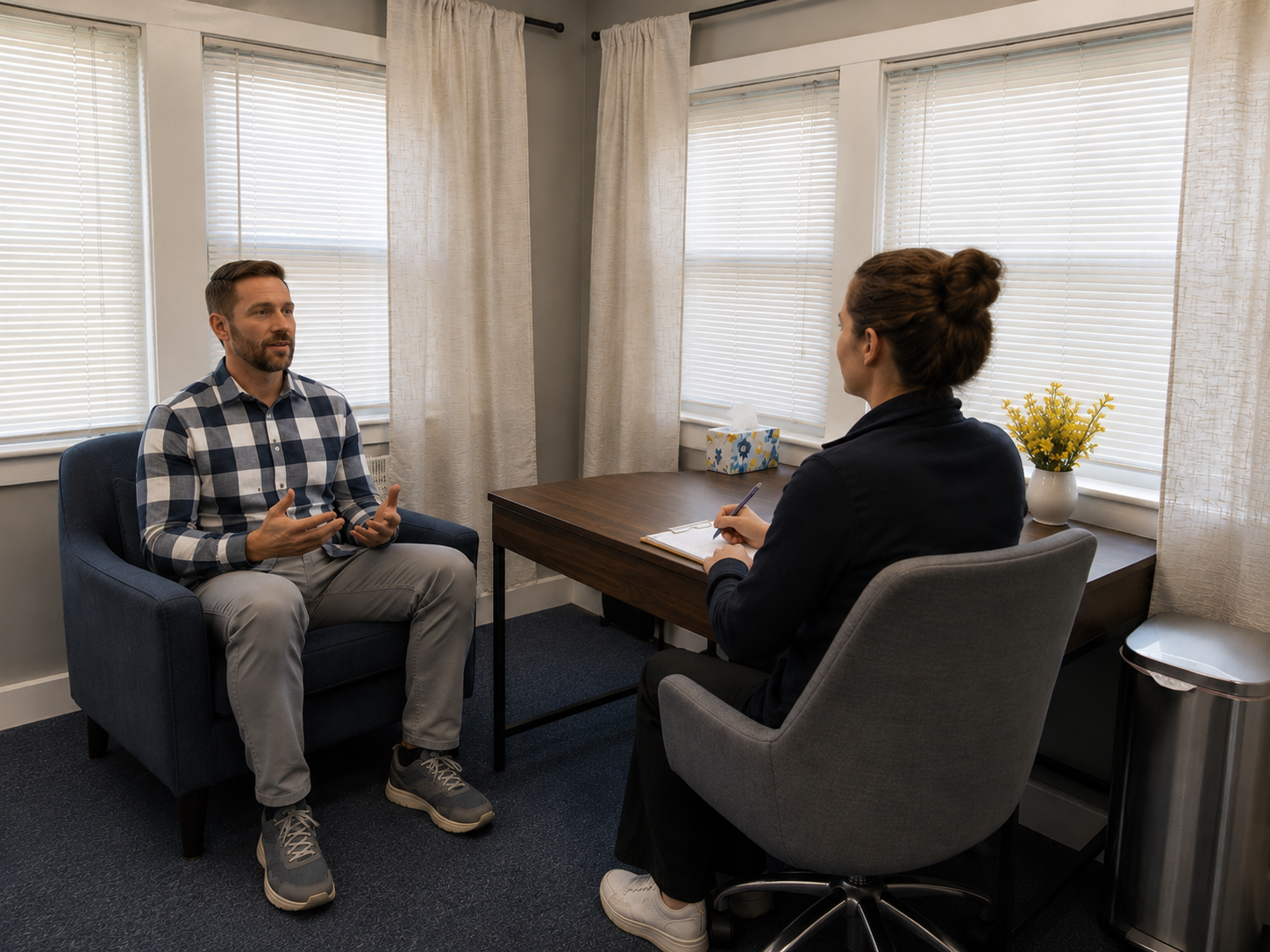
What Can Men’s Pelvic Floor Physical Therapy Help With?
The pelvic floor plays an important role in bladder and bowel control, sexual function, core support, and pelvic comfort. Symptoms can develop gradually, after an injury or medical condition, or following prostate surgery.
BLADDER & PROSTATE
Urinary leakage
Urinary leaking
Urgency
Frequency
Waking at night to urinate
Post-void dribbling
Difficulty emptying
Before and after prostate surgery
PELVIC PAIN & SEXUAL HEALTH
Pelvic or perineal pain
Testicular or genital pain
Pain with sitting
Pain with urination or bowel movements
Pain with sexual activity
Erectile dysfunction
Chronic pelvic pain/prostatitis symptoms
What Does Men’s Pelvic Floor Physical Therapy Look Like?
Men’s pelvic floor physical therapy is much more than Kegels. Depending on your symptoms, we may look at how your pelvic floor works alongside your breathing, core, hips, spine, strength, and movement to understand what may be contributing.
UNDERSTAND WHAT’S CONTRIBUTING
We assess pelvic floor function, strength, mobility, breathing, and movement to identify factors that may be contributing to your symptoms.
TREAT WHAT WE FIND
Treatment may include pelvic floor retraining, mobility work, breathing and pressure management, and progressive strengthening.
GET BACK TO WHAT MATTERS
Apply those changes to everyday activities, exercise, work, sexual function, or whatever your individual goals may be.
Men’s Pelvic Health Physical Therapy FAQs
-
Yes! Men have a pelvic floor too. The pelvic floor is a group of muscles at the base of the pelvis that helps support bladder and bowel control, sexual function, and core stability.
Like any other muscles in the body, the pelvic floor can become weak, tense, painful, or poorly coordinated, which can contribute to urinary, bowel, sexual, or pelvic pain symptoms.
-
Yes. Pelvic floor physical therapy can be an important part of recovery after prostate surgery, particularly when urinary leakage is a concern. Treatment focuses on improving pelvic floor strength and coordination and how the pelvic floor works with your breathing and core during everyday movement.
We can also help you develop strategies for leakage with activities such as standing up, walking, lifting, coughing, and exercise as you progress through recovery.
-
Yes. A pre-operative pelvic floor physical therapy visit can help you learn how to correctly engage and relax your pelvic floor before surgery. It also gives us an opportunity to assess your breathing, core function, strength, and movement so you know what to work on before your procedure.
You’ll leave with a clearer understanding of what to expect after surgery, how to use your pelvic floor effectively, and how to gradually return to activity during recovery.
-
Yes. Pelvic floor physical therapy can help when you’re dealing with frequent urination, sudden strong urges, or feeling like you always need to know where the nearest bathroom is. These symptoms can be influenced by pelvic floor muscle tension or coordination, bladder habits, fluid intake, and how your nervous system responds to bladder signals.
Treatment may include pelvic floor retraining, bladder strategies, urge-control techniques, and addressing mobility or muscle tension that may be contributing to your symptoms.
-
Yes. Pelvic floor physical therapy can help address many of the muscle and nerve-related symptoms associated with chronic pelvic pain and chronic prostatitis/chronic pelvic pain syndrome (CP/CPPS). Symptoms may include pain or pressure in the pelvis, perineum, genitals, or rectum, as well as discomfort with sitting, urination, bowel movements, or sexual activity.
Treatment focuses on identifying and addressing pelvic floor tension, mobility restrictions, nerve sensitivity, breathing, and other musculoskeletal factors that may be contributing to your symptoms.
-
Yes. Post-void dribbling—leaking a small amount of urine after you think you’ve finished urinating—can sometimes be related to pelvic floor function and coordination. Pelvic floor physical therapy can assess what may be contributing and teach strategies to help improve emptying and reduce leakage after urination.
Ready to Get Started?
Whether you’re preparing for or recovering from prostate surgery, dealing with bladder symptoms, or trying to get to the bottom of pelvic pain, we’re here to help you understand what’s going on and find a path forward.
Have more questions? Visit our General FAQs →