
POSTPARTUM • RUNNING • STRENGTH • SPORT
Postpartum Return to Running & Sport Physical Therapy
Being cleared for exercise doesn’t always mean you feel ready to run, lift, or return to sport. Postpartum physical therapy can help bridge the gap between recovery and higher-level activity by rebuilding strength, managing pelvic floor symptoms, and gradually preparing your body for the demands of running, lifting, jumping, and sport.
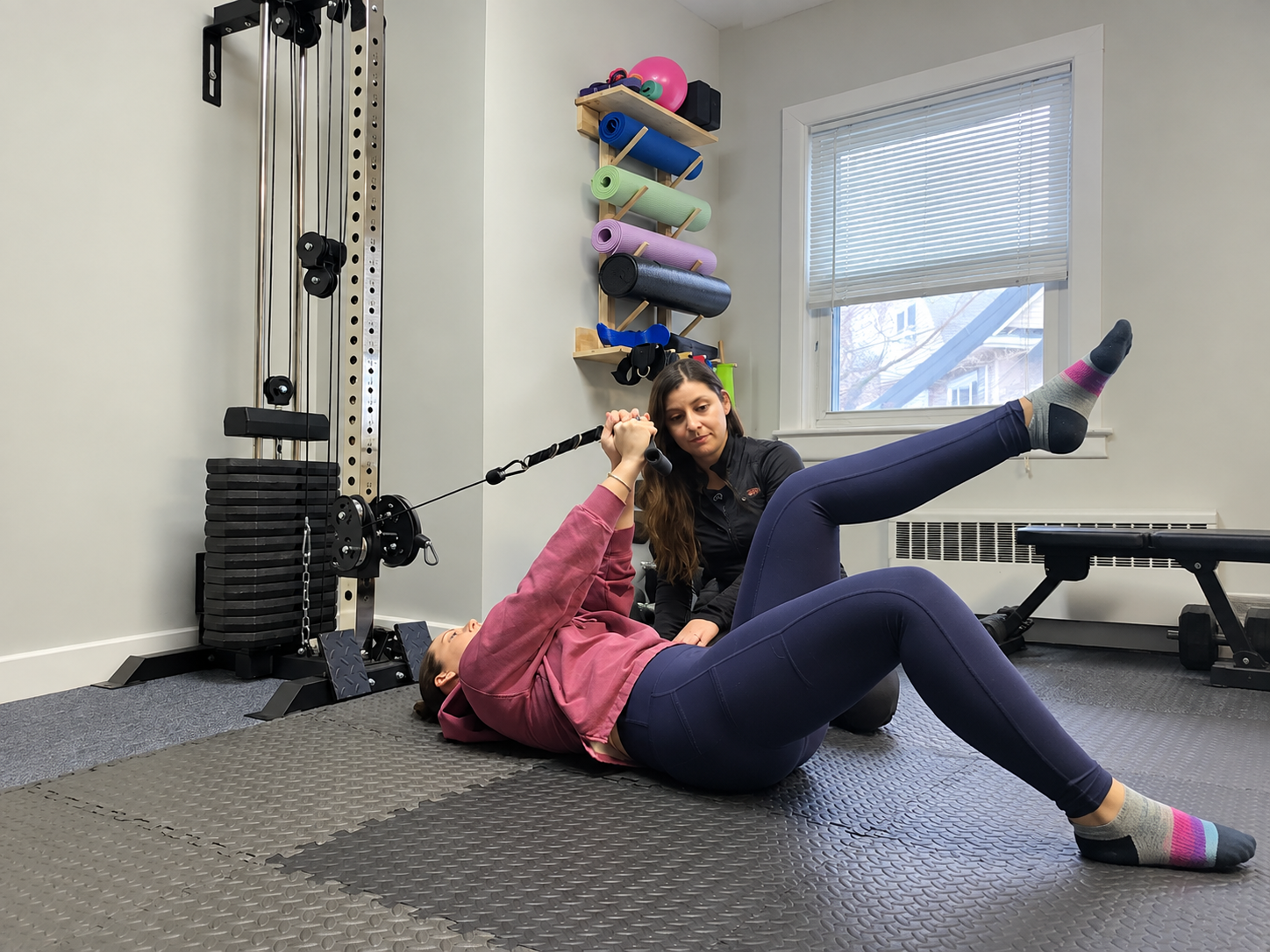
Are You Ready to Return to Running or Sport?
Postpartum recovery doesn’t follow a single timeline, and being medically cleared for exercise doesn’t necessarily mean your body is ready for the demands of running, jumping, or higher-level training. We look at your symptoms, strength, and how your body handles impact to help determine what you’re ready for now and what we should build toward.
PELVIC FLOOR & CORE SYMPTOMS
Urinary leakage
Pelvic pressure or heaviness
Pelvic or abdominal pain
Low back or hip pain
Abdominal doming or diastasis concerns
Difficulty managing pressure
RUNNING & SPORT CONCERNS
Feeling weak or unstable
Pain with running or exercise
Difficulty returning to previous pace or distance
Symptoms with jumping or impact
Uncertainty about how to progress
Wanting to rebuild strength before returning to sport
From Postpartum Recovery to Performance
Returning to running or sport takes more than waiting a certain number of weeks. We progressively build the strength, coordination, and impact tolerance your body needs for the specific activities you want to return to.
REBUILD STRENGTH
Build strength through your core, hips, legs, and pelvic floor with progressive exercises that prepare your body for higher-level activity.
PREPARE FOR IMPACT
Gradually introduce jumping, hopping, running, and other impact activities while monitoring how your pelvic floor and the rest of your body respond.
RETURN TO YOUR SPORT
Progress toward the actual demands of running, lifting, recreational sports, or competitive athletics—not just being able to complete an exercise without symptoms.
Postpartum Return to Running & Sport FAQs
-
There isn’t one exact week when everyone is ready to start running postpartum. Your recovery, delivery, symptoms, strength, and ability to tolerate impact all matter when deciding when and how to return.
A postpartum physical therapy assessment can help determine whether your body is ready for running and identify strength, pelvic floor function, and impact tolerance that may need more work before—or as—you begin.
-
Being pain-free during everyday activities is a good start, but running places much greater demands on your body. We look at how you manage single-leg strength, balance, jumping and impact, as well as how your pelvic floor and core respond to those demands.
The goal is to make sure you have the strength, control, and impact tolerance needed to gradually return to running—not just reach a certain number of weeks postpartum.
-
Urinary leakage with running is common after pregnancy and childbirth, but it isn’t something you have to accept as your new normal. Leakage can be related to pelvic floor strength or coordination, pressure management, impact tolerance, and how your whole body is handling the demands of running.
Pelvic floor physical therapy can help determine why you’re leaking and build the strength, coordination, and running tolerance needed to address it.
-
In many cases, yes. Having pelvic organ prolapse doesn’t automatically mean you need to stop running or avoid impact exercise. What matters is how your body responds and whether you’re experiencing symptoms such as pressure, heaviness, or bulging during or after activity.
Pelvic floor physical therapy can help with strength, pressure management, impact tolerance, and running progression so you can find the level of activity that works for you.
-
Yes. Having diastasis recti doesn’t automatically mean you need to avoid running or higher-impact exercise. What matters is how your abdominal wall, pelvic floor, and the rest of your body manage the demands of the activity.
Physical therapy can help you build core and whole-body strength, improve pressure management, and gradually progress impact and running based on your symptoms and goals.
-
Pregnancy and childbirth can change strength, mobility, and how your body manages the demands of running. Weakness or changes in the core, hips, pelvic floor, or surrounding muscles can contribute to pain once you start increasing impact, distance, or intensity.
We look beyond just where it hurts to assess strength, mobility, running mechanics, and how your whole body handles load so we can address what may be contributing and help you return to running comfortably.
-
A return-to-running assessment looks at more than your pelvic floor. We assess your symptoms, core and pelvic floor function, hip and leg strength, balance, single-leg control, and how your body responds to impact.
Depending on your goals, we may also look at jumping, hopping, running mechanics, and sport-specific movements to identify what you’re ready for and what we should work on before progressing.
-
Absolutely. Return-to-sport pelvic floor physical therapy isn’t just for runners. We can help you prepare for lifting, CrossFit, HIIT, court or field sports, and other activities that require strength, impact, speed, or higher-level movement.
Treatment is built around the specific demands of the activity you want to return to, while addressing pelvic floor symptoms, strength, coordination, and overall capacity.
-
You don’t have to be injured—or stop running completely—to benefit from physical therapy. If you’re noticing leaking, heaviness, pain, weakness, decreased confidence, or simply feel like your body isn’t handling running the way it used to, it’s worth taking a closer look.
We can assess your strength, pelvic floor and core function, impact tolerance, and running mechanics to identify what may be limiting you and help you progress toward your running goals.
Ready to Get Started?
Whether you’re hoping to get back to running, lifting, or the sport you love, we can help you bridge the gap between postpartum recovery and feeling strong, confident, and ready for higher-level activity.