
PELVIC FLOOR • BLADDER • BOWEL • PELVIC PAIN
Pelvic Floor Physical Therapy
Pelvic floor symptoms can show up in more ways than you might expect. Leaking, urgency, constipation, pelvic pressure, pain with sex, or persistent pelvic, hip, and low back pain can all be connected to how your pelvic floor and the rest of your body are working together. Pelvic floor physical therapy helps identify what’s contributing to your symptoms and builds a treatment plan around you and your goals.
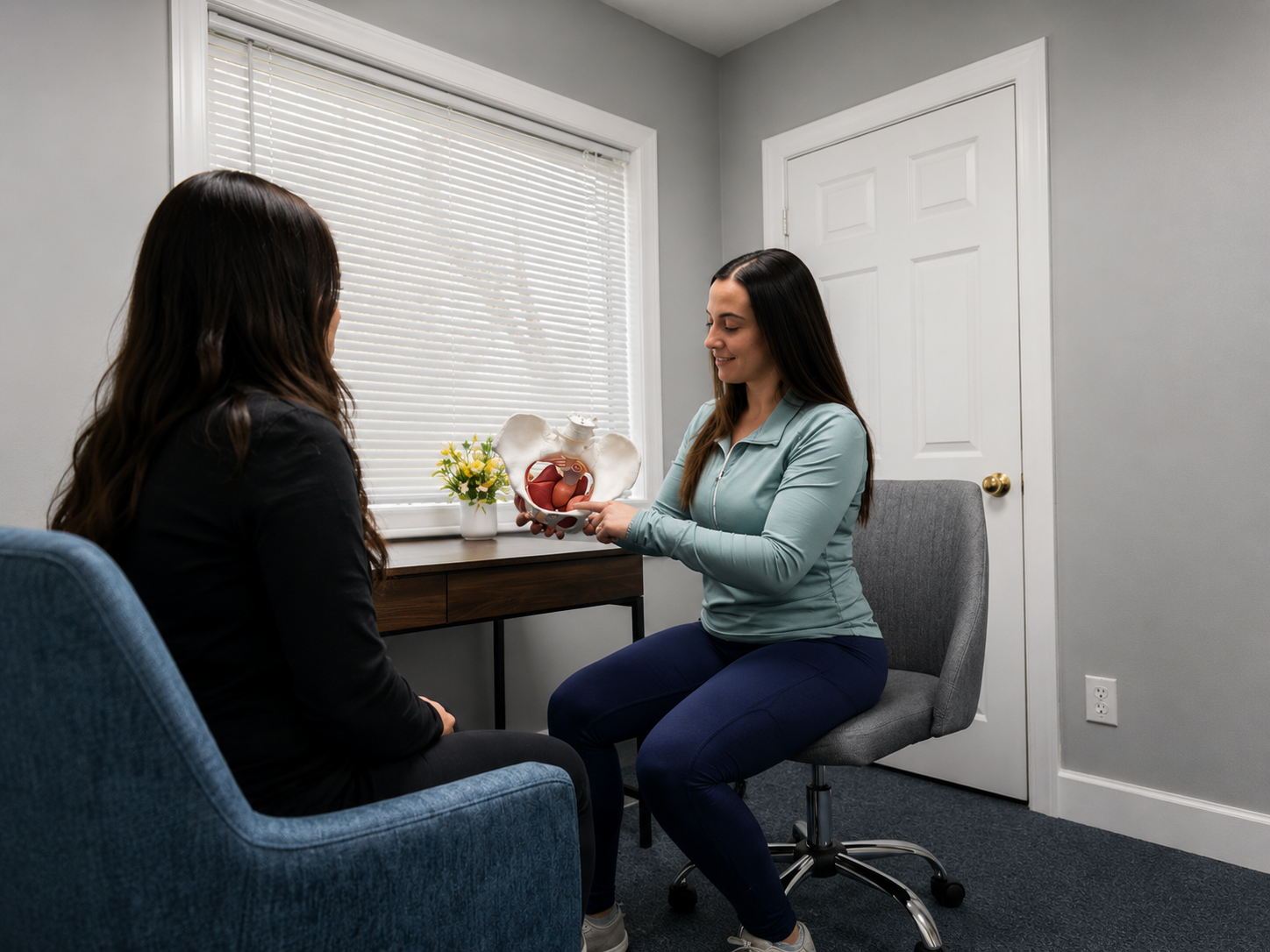
What Can Pelvic Floor Physical Therapy Help With?
Pelvic floor dysfunction can affect bladder and bowel function, sexual health, comfort, and everyday movement. You don’t need to know exactly what’s causing your symptoms before you come in, that’s part of what we help you figure out.
BLADDER
Urinary leakage • Urgency • Frequency • Difficulty emptying • Post-void dribbling
BOWEL
Constipation • Straining • Incomplete emptying • Bowel urgency • Fecal leakage
PELVIC PAIN
Pain with sex • Vaginal pain • Rectal pain • Genital pain • Persistent pelvic pain
PELVIC PRESSURE & PROLAPSE
Heaviness • Pressure • Vaginal bulging • Feeling like something is “falling out”
CORE, HIP & LOW BACK
Core concerns • Hip pain • Low back pain • Pelvic pain • Difficulty with movement or exercise
OTHER PELVIC FLOOR CONCERNS
Difficulty relaxing • Muscle tension • Coordination concerns • Symptoms after pelvic surgery
What Does Pelvic Floor Physical Therapy Look Like?
Pelvic floor physical therapy is much more than Kegels. Your treatment depends on what’s contributing to your symptoms, how your body moves, and what you want to get back to. We look beyond the pelvic floor to understand how your breathing, rib cage, core, hips, spine, and movement patterns may be influencing what you’re experiencing.
UNDERSTAND WHAT’S CONTRIBUTING
We look at your symptoms, pelvic floor function, strength, mobility, breathing, and movement to understand what may be contributing to the problem
TREAT WHAT WE FIND
Treatment may include hands-on techniques, pelvic floor retraining, mobility work, breathing and pressure management, and progressive strengthening based on what your body needs.
PUT IT INTO PRACTICE
We carry those changes into everyday movement, exercise, lifting, running, intimacy, or whatever activities matter to you.
Pelvic Floor Physical Therapy FAQs
-
Your first appointment is 75 minutes, giving us plenty of time to understand the full picture—not jump straight into treatment or an internal exam. We’ll talk about your symptoms, health history, daily activities, and what you want to get back to. Your physical assessment may include posture, breathing, movement, strength, mobility, and pelvic floor function depending on your needs and goals.
An internal pelvic floor assessment is never required. If we think it could provide useful information, we’ll explain why, discuss your options, and let you decide what feels right for you. You’ll leave your first visit with a better understanding of what may be contributing to your symptoms and a plan for moving forward.
-
No. An internal pelvic floor exam is always your choice. There are many ways we can assess and treat the pelvic floor without an internal exam. If we think an internal assessment could help us better understand what’s contributing to your symptoms, we’ll explain what it involves, why it may be useful, and any other options available.
You decide what feels right for you, and consent is ongoing throughout your care.
-
No! And Kegels aren’t right for everyone. Pelvic floor symptoms can happen when muscles are weak, tense, poorly coordinated, or not working well with the rest of your body. Treatment might include learning how to relax or coordinate the pelvic floor, hands-on techniques, mobility work, breathing and pressure management, strengthening, or changes to everyday movement and exercise.
The goal is to figure out what your body actually needs, rather than giving everyone the same set of exercises.
-
Pelvic floor physical therapy can help with a wide range of symptoms across all stages of life. We treat bladder and bowel concerns, pelvic pressure and prolapse, pelvic pain, pain with sex, difficulty relaxing or coordinating the pelvic floor, and symptoms related to pregnancy, postpartum recovery, menopause, prostate conditions or surgery, and other pelvic surgeries.
Because the pelvic floor works as part of a larger system, treatment may also address related hip, low back, core, or movement concerns when they’re contributing to your symptoms.
-
It’s not always easy to tell and sometimes a pelvic floor can be both tight and weak. Symptoms like leaking, urgency, constipation, pelvic pain, pressure, or difficulty with exercise can occur for different reasons, which is why simply doing more Kegels isn’t always the answer.
A pelvic floor physical therapist can assess how well your muscles relax, contract, coordinate, and respond to movement and pressure to determine what your pelvic floor actually needs.
-
Yes. Bladder leakage and urgency are common in people of all ages and stages of life, but common doesn’t mean you have to accept them. And if you’ve been told leaking is just part of having had a baby, getting older, or being active—that doesn’t mean you have to live with it.
Pelvic floor physical therapy can help identify why your symptoms are happening and address factors such as pelvic floor strength or tension, coordination, bladder habits, breathing and pressure management, and movement patterns.
-
Yes. Constipation isn’t always just about diet or how often you have a bowel movement. Sometimes the pelvic floor muscles don’t relax or coordinate properly when you’re trying to empty your bowels, which can contribute to straining, incomplete emptying, or feeling like you still need to go.
Pelvic floor physical therapy can help improve muscle relaxation and coordination, toileting mechanics, breathing and pressure management, and other factors that may be making bowel movements more difficult.
-
Yes. Pain with sex is common, but it shouldn’t be something you’re expected to just push through. Pain can be related to pelvic floor muscle tension, difficulty relaxing or coordinating the muscles, scar tissue, hormonal changes, or other factors affecting the pelvis and surrounding tissues.
Pelvic floor physical therapy can help identify what may be contributing to your pain and use a combination of education, hands-on treatment, mobility, relaxation and coordination strategies, and gradual return to comfortable activity based on your needs and goals.
-
Yes! Men have a pelvic floor too, and pelvic floor physical therapy isn’t just for women or people who have had a baby. The pelvic floor plays an important role in bladder and bowel control, sexual function, core support, and pelvic stability.
Pelvic floor physical therapy can help with concerns such as urinary leakage or urgency, post-void dribbling, pelvic or genital pain, constipation, erectile or sexual dysfunction, and symptoms before or after prostate surgery. Treatment is individualized based on your symptoms, goals, and what we find during your assessment.
-
It’s okay if pelvic floor physical therapy hasn’t helped you in the past—or if you feel like you’ve already tried everything. Pelvic floor PT can look very different depending on the provider and approach. We take a whole-body perspective and look at how your pelvic floor is working alongside your breathing, rib cage, core, hips, spine, strength, and movement. We’ll also talk about what you’ve already tried, what helped, what didn’t, and where there may be pieces that haven’t been addressed yet.
Ready to Get Started?
Whether you know exactly what’s going on or you’re still trying to figure out why you’re having symptoms, we’re here to help.
Have more questions? Visit our General FAQs →